
Volunteer efforts to remove invasive plants in the Rose Creek Watershed have made a tremendous difference. In particular, the Tri-Canyon Weed Warriors, volunteers with the Tri-Canyon Park Rangers, the Friends of Rose Canyon, Mike Kelly of the Conservation Resources Network, and countless other volunteers have spent thousands of hours removing invasive species to improve our watershed. A huge thanks to all our volunteers!
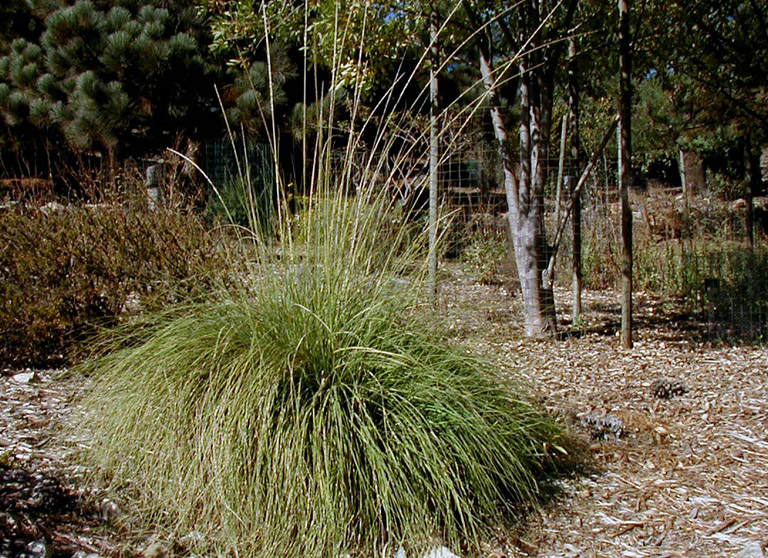
Deergrass is one of many attractive California-friendly alternatives to pampas grass.
You can play a part in the fight against exotic invasive plants in the watershed in which you live. Private property owners play an important role because many of the seed sources of the pests are planted on private lands. Once their seeds are blown away or carried off by wildlife, they can take root on public lands and cause destruction in native habitats. You should avoid planting any of these exotic invasive plants on your property, and take efforts to remove any that are already growing. Be sure to keep an eye out for new sprouts.
Visit the California Invasive Plant Council’s Inventory for more information about each species
Invasive Exotic Plants in the Rose Creek Watershed
| Common Name | Botanical Name |
|---|---|
| Pampas grass | Cortaderia selloana |
| Jubata grass | Cortaderia jubata |
| Fountain grass | Pennisetum setaceum |
| Cheat grass | Bromus tectorum |
| Veldt grass | Ehrharta calycina |
| Foxtail chess grass | Bromus madritensis |
| Fennel | Foeniculum vulgare |
| Garland daisy | Chrysanthemum coronarium |
| Freeway iceplant | Carpobrotus spp. |
| Mexican fan palm | Washington Robusta |
| Canary Island date palm | Phoenix canariensis |
| Periwinkle | Vinca major |
| English ivy | Hedera helix |
| Cape and German ivy | Delairea odorate |
| Brazilian pepper | Schinus terebinthifolius |
| Yellow star thistle | Centaurea solstitialis |
| Tocalate thistle | Centaurea melitensis |
| Mustard | Brassica tournefortii |
| Giant reed | Arundo donax |
| Teasel | Dipsacus fullonum L. |
| Onionweed | Asphodelus fistulosus |
Resources
California Native Plant Society’s list of Weeds in San Diego County Wildlands